What Take-Two Interactive, the company behind Grand Theft Auto VI, has taught us about creativity, AI and the many pathways open to young people. By Philip Courtney, CEO, Urban Arts
NEW YORK, NOVEMBER 19, 2026—Today, Rockstar Games releases Grand Theft Auto VI, one of the most anticipated launches in entertainment history. Its parent company, Take-Two Interactive, has a track record of hits that few companies in any industry can match. Ask its CEO, Strauss Zelnick, where hits come from, and his answer is simple: “Hits are created by genius.”
Not by algorithms. Not by data sets. By people.
That idea resonates with us at Urban Arts, and it’s why our partnership with Take-Two means so much to us. Here’s what working alongside Take-Two since 2019 has taught me about creativity, about AI, and about what it really takes to open doors for young people.
Value on both sides
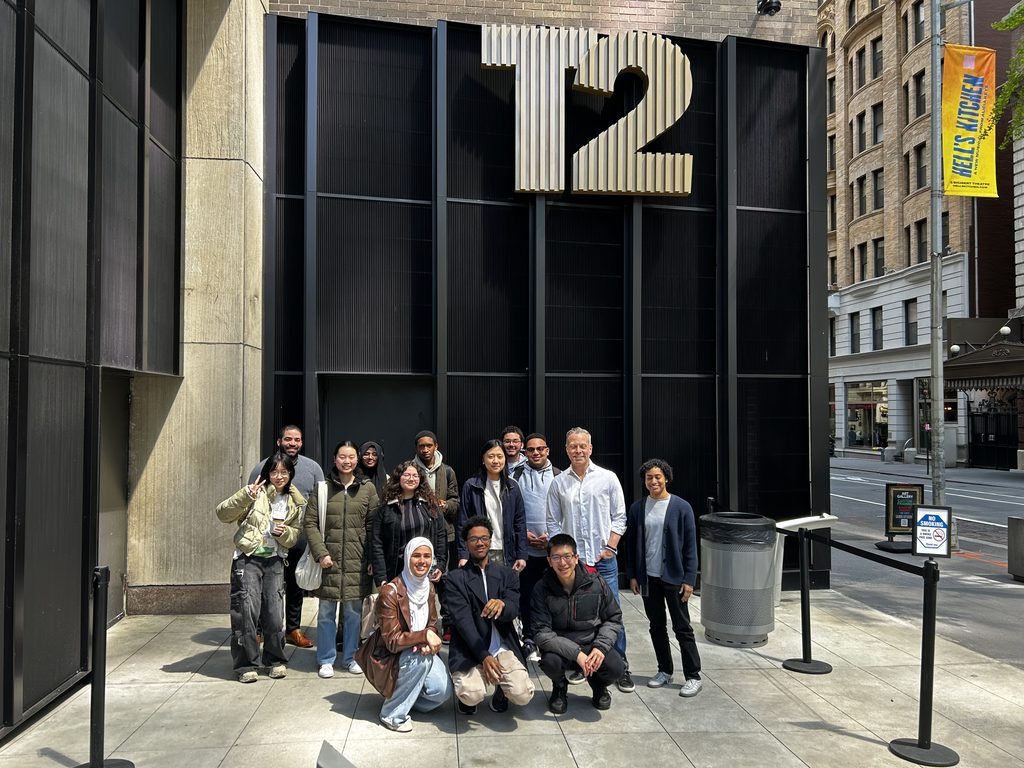
I met Alan Lewis, Take-Two’s Head of Global Corporate Communications, through the Animation Industry Council in 2019. Take-Two became an Urban Arts partner later that year. When Alan visited Game Academy, our free game design program, he saw what we see every day: talented young people who are ready for this industry, if someone opens the door.
Then came the spring of 2020. Our students were suddenly learning from their bedrooms, cut off from the people and places that make a career feel real. At the same time, I’d been thinking hard about what it means to be a true partner to the companies that support us. Philanthropy is vital, but it only gets you so far. I wanted Urban Arts to create real value for our partners, so the relationship works on both sides.
And Take-Two had something special: a thriving workforce, in a booming business, that I thought might want to give back.
So I pitched Alan a simple idea. What if Take-Two’s game designers, artists and developers mentored our students? Alan was interested and, like anyone running a good pilot, he wanted to start small, with maybe two or three mentors. He put the call out across Take-Two’s labels. I remember his email back to me: Wow, a lot more people want to get involved in this. Let’s go big.
Co-Op Play: what happened next
That spring, we launched Co-Op Play. The pilot paired 15 developers from across Take-Two’s labels, including Rockstar Games and 2K, with 15 Game Academy students. Nearly all of those students (92%) identified as Black and/or Latinx, and 77% came from low-income households. For eight weeks, each pair met by video or phone every other week to talk through portfolios, technical questions, paths into the industry and what a day in the life of a game developer really looks like.
The results spoke for themselves. Every student rated the experience “Excellent.” Everyone said it made them more interested in a career in computer science or creative technology.
And here’s the part that really matters—every mentor said they would do it again, and every one said they wanted Take-Two to offer more opportunities like this. One mentor told us the experience had affected them more than they expected, and that many colleagues would want to pay their own experience forward. That’s value on both sides.
The impact shows up in careers. Kimari, one of our Game Academy students, was paired with Jennifer Ashiru, a producer at Take-Two. Those conversations helped her realize she wanted to work in game production as a producer. Seeing someone who looked like her succeed in that role made her goals feel, in her words, “100% achievable.”
She started applying to internships in earnest, and the next summer she landed a game production internship at Warner Bros. Today, after graduating from NYU, she works at Lucasfilm.
Co-Op Play kept growing. By its third year, more mentor pairs completed the full program, with mentees ranging from high school students to college students. The feedback held: 92% of students who responded rated it Excellent or Very Good, and every mentor who responded said they would consider mentoring again. Since then, we’ve continued with more mentorships, visits to Take-Two’s New York headquarters and much more.
The pathway nobody predicted
Faiza found Urban Arts almost by accident. She liked science, art, business, and law, but nothing had clicked. Then she saw a flyer for an after-school program. She admits she missed the game design part entirely. All she saw was “FREE COLLEGE PREP.”
In Game Academy she learned to code, then produce digital art, then how to build games. Along the way she discovered something she didn’t expect: she didn’t love playing games, but she loved making them. Senior year, our college team helped her build her college list, write her essays and apply for scholarships. She earned a full ride to NYU to study game design.
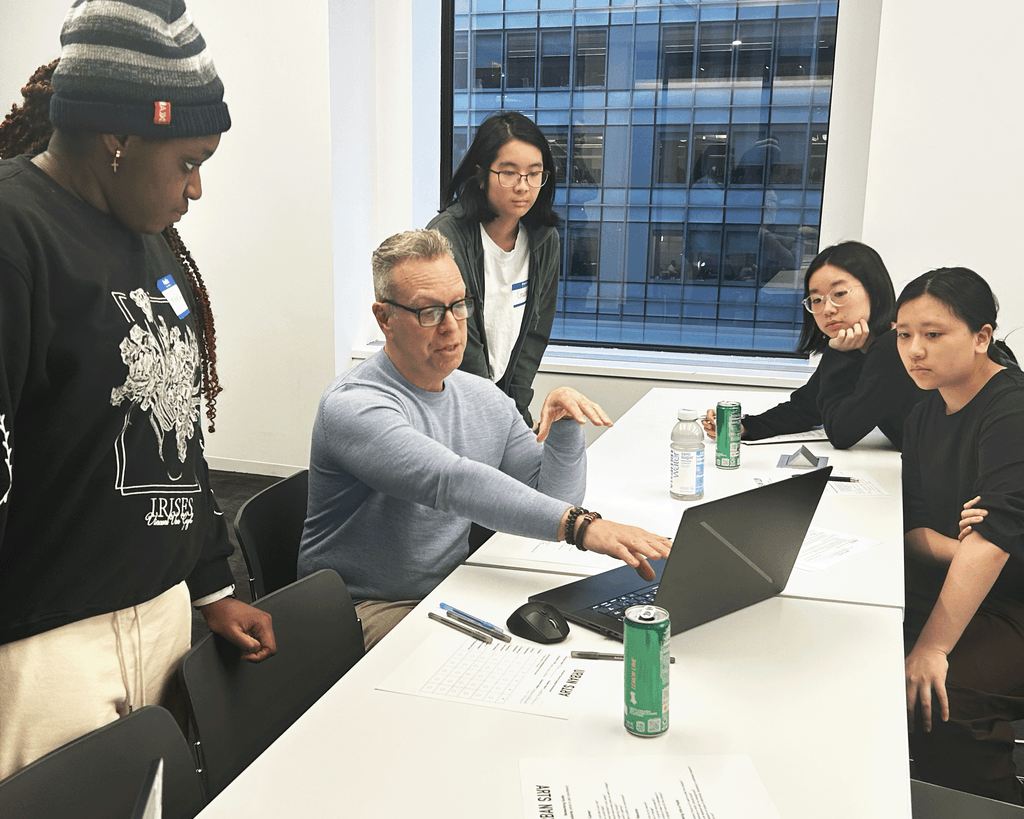
As an alumna, she joined one of our visits to Take-Two’s New York headquarters. There she met Vincent Garcia, Take-Two’s Business Affairs Counsel, and it was her “aha” moment. “I can be in the game industry, be creative, AND be a lawyer?!” she asked. “Game changer!”
Faiza has since changed her major to Integrated Design and Media at NYU Tandon, which sets her up for a path into intellectual property law. She’s also now a College Fellow at Urban Arts, helping high school students with their own college applications.
Young people’s paths rarely run in a straight line, and they’re impossible to predict. That’s why we never treat Game Academy as a pipeline for game designers alone. The games industry needs artists and engineers, and it also needs producers, marketers, communicators and lawyers. And as Strauss and Hiroki Totoki discussed last month, the lines between gaming, anime, film and music are disappearing, so tomorrow’s creators need to think across all of these facets. Our Take-Two mentors talk with students about all of it—from game mechanics to how games are marketed and the legal side of who owns them.
It’s also why college access is built into everything we do. Urban Arts students have earned $71 million in scholarships since 2020, and through our 100% to College campaign, we’re working toward $100 million by 2030.
You can’t predict a hit
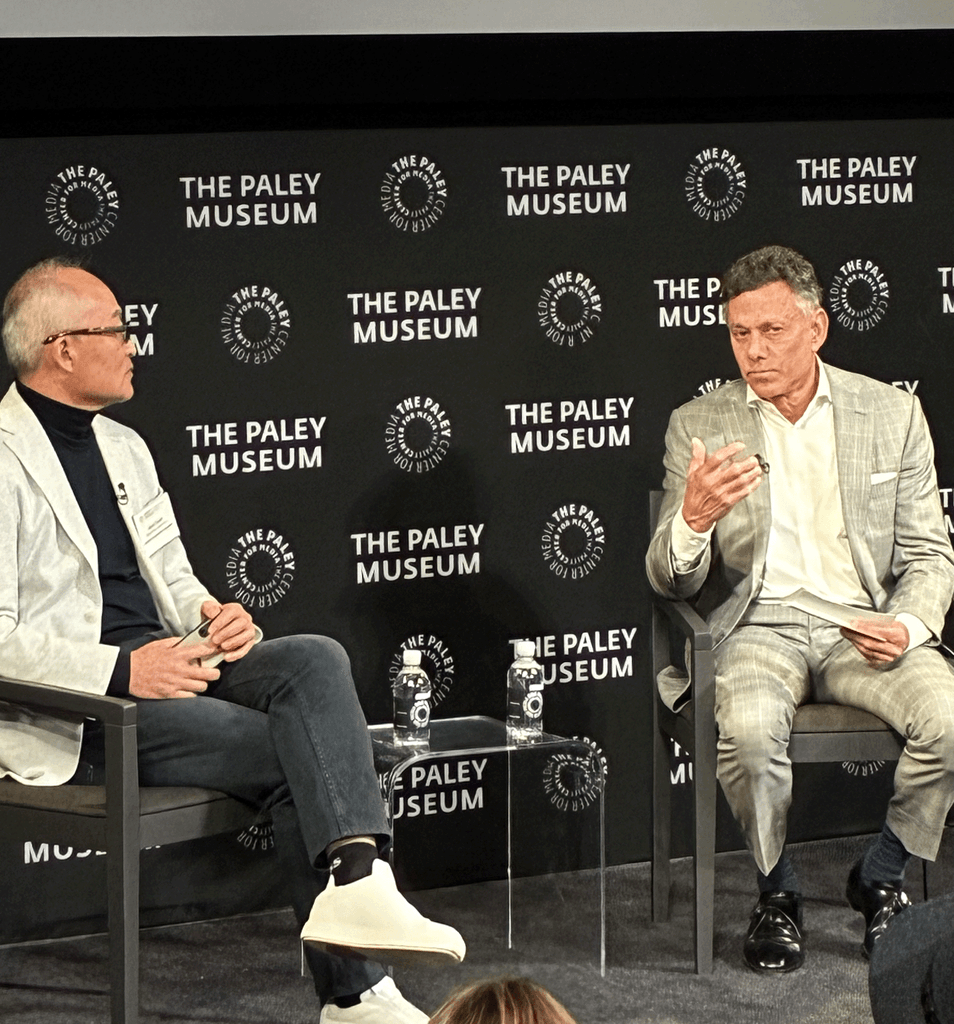
Last month, at the Paley Center for Media’s International Council Summit, I watched Strauss sit down with Sony’s President and CEO, Hiroki Totoki, to talk about gaming, culture and the future of entertainment. Their message was unmistakable: creativity won’t be replaced. AI learns from what has already been made, so it can’t predict the next Grand Theft Auto. The hits nobody sees coming still come from people.
Strauss has been making that case for years. He ran 20th Century Fox and BMG Entertainment before leading Take-Two, and he describes AI as built on data that already exists. In his words, “It’s backward-looking.” Big hits, he argues, look forward.
I agree. A game like Grand Theft Auto doesn’t come from a pattern. It comes from people willing to imagine something that doesn’t exist yet. That’s the bet we make on our students: their creativity, their perspective, and their ideas are what the future needs. It’s also why it mattered to hear two of the most influential leaders in entertainment stand up for protecting creators’ rights.
But that doesn’t mean ignoring AI. Their conversation made a second point that matters just as much for our students: AI on its own won’t replace workers, but professionals who know how to use it will pull ahead. Take-Two’s own strategy reflects this. Strauss describes it as being “the most creative, the most innovative, the most efficient,” and he has said AI informs all three.
We’re taking the same approach. This summer, Founders Lab, our AI-first entrepreneurship accelerator for high school seniors, held its first Demo Day. Our goal is to train students who use AI to work faster and smarter, with ideas that are unmistakably their own.
Values that live off the wall
Every year I see Strauss at the Paley International Summit. A couple of years ago, he listed Take-Two’s core values from the stage: creative, innovative and efficient. Later, at the Games for Change Festival, I heard Alan cite the very same three.
That stuck with me. In a lot of organizations, core values are words on a wall. At Take-Two, two leaders in very different roles, on different stages, named the same three without missing a beat. That’s what it looks like when values are part of the culture, not a poster. As someone who runs an organization, it’s something I admire and aspire to.
Hits can’t be predicted. People can be developed.
When Grand Theft Auto VI arrives on November 19, millions of people will experience what human creativity at scale looks like. Somewhere in that audience is a young person who doesn’t yet know they could build worlds like that, or market them, or protect them, or one day lead the company that makes them.
Our job is to make sure they find out.
To Alan, Strauss and the entire Take-Two community: thank you for showing up for our students, and congratulations on what’s ahead.
Learn more about Game Academy and our 100% to College campaign at urbanarts.org.
About Urban Arts
Urban Arts is the national nonprofit that uses digital game design and emerging technologies as pathways to college and careers, providing free programming designed to open doors in STEM and the arts.
Its College Board-approved Game On by Urban Arts curriculum is offered nationally, while its free Game Academy serves students in New York City year-round. Urban Arts also provides college-access services, mentorship and networking opportunities that connect students with leading media and technology companies.
Urban Arts serves thousands of students annually, and alumni have gone on to work at companies including Lucasfilm, Unity, Salesforce and Amazon. The organization was founded in 1992 and works with partners across 15 states and Washington, D.C.
Game changers start here.
Media Contact
Jen Walter
Director of Marketing and Communications at Urban Arts
jen@urbanarts.org